
铁线虫
首颗“雄安造”卫星成功发射入轨_我的网站

一 |
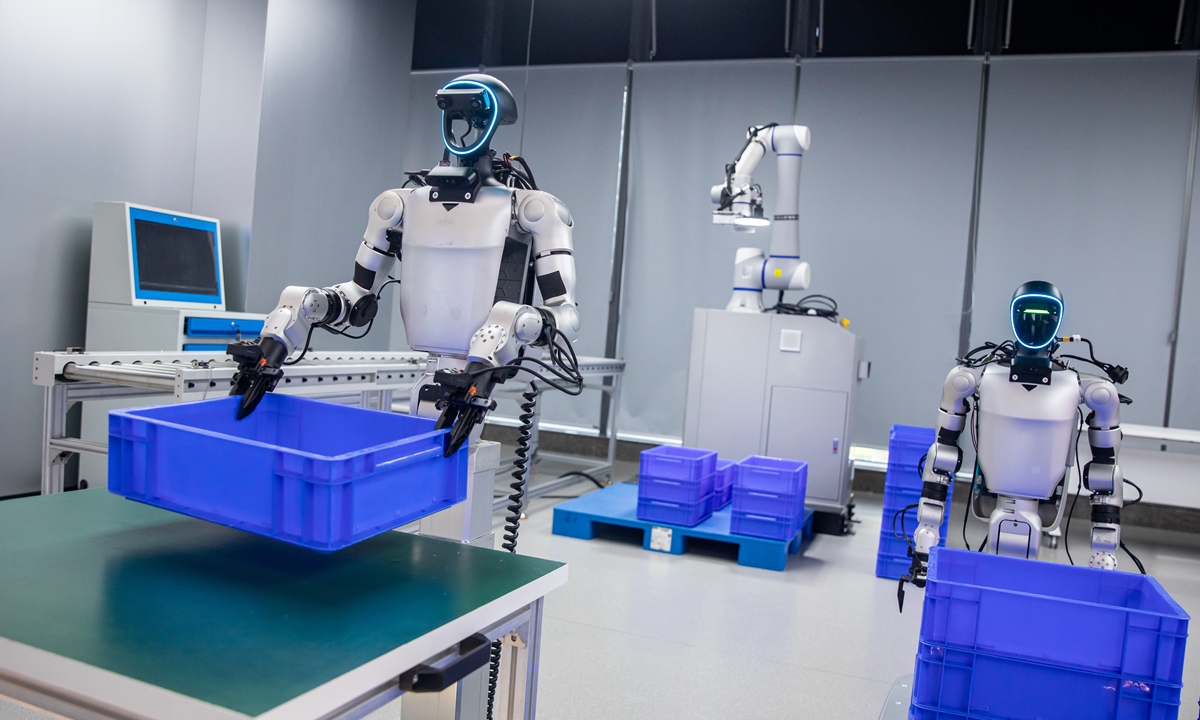
Consumer-oriented embodied AI model developer Noin Intelligence announced a 500-million-yuan ($74.1 million) Angel++ funding round on Monday, the company said in a statement, marking another major capital inflow into embodied AI models as investors turn their attention toward the "brains" behind robots.
According to the statement, the company plans to channel the funding into developing more generalizable embodied AI models, advancing iterations of its GLOW generative model, and accelerating product validation and mass production.
Industry experts noted that a broader shift in the robotics race, with competition moving beyond hardware performance toward the development of core intelligence capabilities. While hardware forms the physical foundation of robots, embodied AI models determine their ability to perceive, learn, reason and adapt in real-world environments, making them a key factor in unlocking future opportunities.
The funding momentum extends beyond Noin Intelligence, with several other companies recently securing major financing rounds that are largely focused on advancing their AI models.
On August 3, Wuxi-based embodied intelligence company DISCOVER Robotics secured a $100 million Angel+ funding round, shortly after completing its initial angel financing of more than $100 million, according to Wuxi Fabu, the official WeChat account of the local government.
The company later introduced ORION, a hierarchical embodied intelligence foundation model, as well as LOOP, a virtual-real hybrid data closed-loop system, and DISCOVERSE, a high-fidelity simulator. The solutions are designed to tackle two major challenges facing the embodied intelligence — data scarcity and limited generalization — and accelerate the development of more capable AI systems, according to Wuxi Fabu.
In addition, according to industry media reports on August 3, Ant Lingbo, Ant Group's embodied intelligence subsidiary, has launched its first round of financing, seeking to raise 1.5 billion yuan.
The company aims to complete a second funding round by the end of this year. The company later confirmed to media that it was in discussions with investors, saying that as a core initiative of Ant Group's embodied intelligence strategy, it will continue to focus on developing general-purpose robotic brains, increase investment in embodied-native technology pathways, and accelerate industrial deployment.
The shift is also reflected in the fundraising priorities of publicly listed candidates.
Notably, Unitree Robotics, which has recently drawn widespread attention from the capital market, officially opened IPO subscriptions on Monday. According to its prospectus registration document disclosed by the Shanghai Stock Exchange on June 2, the company plans to raise 4.202 billion yuan through the IPO, with nearly half of the proceeds earmarked for its intelligent robot model R&D project.
Of the total proceeds, 2.02 billion yuan will be allocated to the intelligent robot model development project, significantly exceeding the 1.11 billion yuan planned for robot body R&D, highlighting the company's focus on developing the AI capabilities that power robots.
Wang Peng, an associate research fellow at the Beijing Academy of Social Sciences, said the latest financing trend shows that capital is reassessing where the core value of robotics lies. Investors are increasingly moving beyond robot hardware itself and treating embodied AI models and robotic "brains" as high-value assets, with capital flowing more toward software, algorithms and intelligence capabilities, he told the Global Times on Monday.
The valuation framework is also being reshaped, with investors paying greater attention to real-world deployment, customer adoption and repeat demand rather than hardware specifications or corporate narratives alone. Whether robots can operate reliably in real application scenarios has become a key benchmark for investment decisions, Wang said.
He added that increased investment in embodied AI models and generative world models could help address the structural gap between general-purpose AI models and physical-world interaction by expanding the supply of real-world interaction data. Capital is also increasingly favoring companies aligned with the country's long-term industrial priorities and emerging industry development plans, he said.
According to data from IT industry research platform ITjuzi.com, financing in China's embodied intelligence sector totaled 93.5 billion yuan in the first half of 2026, surpassing 90 billion yuan and marking a fivefold increase from the same period in 2025. The number of financing deals reached 322, up 137 percent year-on-year.
As China enters the first year of its 15th Five-Year Plan period (2026-30), policy priorities are placing greater emphasis on developing emerging industries, with the country accelerating AI development and promoting its integration with various sectors, Chinese experts noted. Meanwhile, as global AI development enters a new stage driven by broader applications and deeper industry integration, embodied intelligence is expected to unlock significant growth potential.
Driven by policy support and rapid industry evolution, the nation's upstream and downstream segments of the AI industry have gained momentum, achieving notable progress.
According to a Bloomberg's Monday report, China's humanoid robot makers commanded more than 97 percent of global shipments in the first half of 2026, according to new industry data affirming the country's early lead against US rivals in the burgeoning field.
Meanwhile, global humanoid robot shipments totaled roughly 19,100 units in the first half of 2026, more than triple the 5,100 units shipped in the same period last year, according to data from Smart Analytics Global. Data further noted the California-based research firm expects shipments to rise to around 60,000 units this year and reach half a million by 2030.
。 首颗“雄安造”卫星成功发射入轨多项国内首创技术在轨验证,解锁卫星批量组网新路径
8月19日7时35分,在酒泉东风商业航天创新试验区,首颗“雄安造”卫星——鸿擎科技“鸿鹄03星”由朱雀三号遥二运载火箭发射升空。王伟倩摄日报讯(记者曹铮、白云)8月19日7时35分,在酒泉东风商业航天创新试验区,首颗“雄安造”卫星——鸿擎科技“鸿鹄03星”由朱雀三号遥二运载火箭发射升空。卫星成功入轨后,太阳翼顺利展开,各项遥测参数正常,发射任务取得圆满成功。这标志着雄安新区空天信息和卫星互联网产业实现了从研发制造到在轨应用的全流程闭环。朱雀三号是我国首次实现陆地回收的运载火箭。箭上搭载的卫星又名“雄安一号”,由北京蓝箭鸿擎科技有限公司自主研制,在位于鸿擎科技雄安中试中心的全国首条流水线式自动化卫星批产产线下线。“这是一颗重541公斤的平板卫星,长3米、宽2米,厚度只有0.4米。”鸿擎科技“鸿鹄03星”项目经理郑书强介绍,星上集成“金乌”动力系统、“赤羽”能源系统、“白泽”电子系统三大自研单机,将对氩工质电推进系统、商业级氮化镓功率器件航天工况等十余项国内首创技术实施在轨验证。从地面到天上,才是真正的考验。星箭分离、自主入轨、回传信号,环环相扣,牵动人心——7时35分,火箭点火升空;10分钟后,星箭成功分离,卫星顺利入轨;随后,卫星在轨传回第一组遥测数据。这颗来自未来之城的卫星将在距地表约500公里的轨道上持续工作。当前,全球商业航天低轨星座规模化建设步伐持续加快。

二 | “这些技术的在轨验证,将补齐低轨卫星平台核心技术短板,破解大规模卫星组网长期在轨运维、能源需求等难题。”目送卫星奔赴太空,郑书强言语间难掩激动。“雄安一号”的设计寿命为5年。

三 | “地面模拟试验虽已覆盖各类工况,但卫星在真实空间环境下的系统表现,有待在轨运行后加以检验。

四 | ”郑书强说,在轨验证数据将源源不断地回传到地面工作站进行技术积淀,推动商业卫星从“单颗造”迈向“批量产”。“这颗卫星是落地雄安的商业航天企业交出的首份飞天答卷。”雄安新区科学园管委会副主任马扬飚介绍,空天信息和卫星互联网产业是雄安新区标志性产业之一,目前雄安已集聚相关生态企业69家,覆盖卫星设计、零部件生产、总装制造、在轨运维、时空应用等全链条。“雄安一号”成功入轨,意味着雄安新区已具备从技术攻关到整星交付的完整能力。一条从研发到制造、从测试到应用的空天信息和卫星互联网产业链,正在这里加速贯通。

五 |
Current article:http://4kx.laojiusidaosenleliao.bond/g7ddh/kfak.html
Published on:12:42:42


